What is VDA19.1? An Introduction to the Technical Cleanliness Standard for Automotive Supply Chains
As new energy vehicles, autonomous driving, hydraulic and fuel systems become increasingly sophisticated, particle contamination-induced risks such as valve sticking, seal failure, motor breakdowns and high-voltage safety incidents have become key quality concerns for vehicle manufacturers and component enterprises. Within the global automotive supply chain quality system, VDA19.1 is a core specification frequently referenced by quality engineers, purchasers and testing laboratories.
Definition of VDA19.1
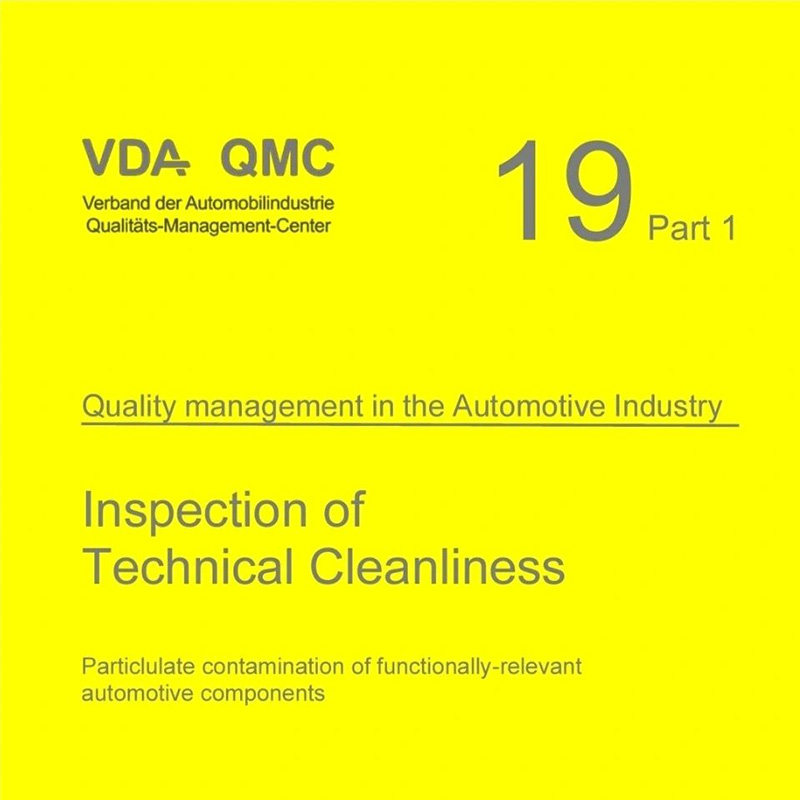
VDA19.1 stands for Inspection of Technical Cleanliness – Particulate Contamination of Functionally-Relevant Automotive Components. Published by VDA QMC of the German Association of the Automotive Industry, it is commonly known in the industry as the Technical Cleanliness Yellow Book. The current valid version is the 3rd edition, updated in July 2025.
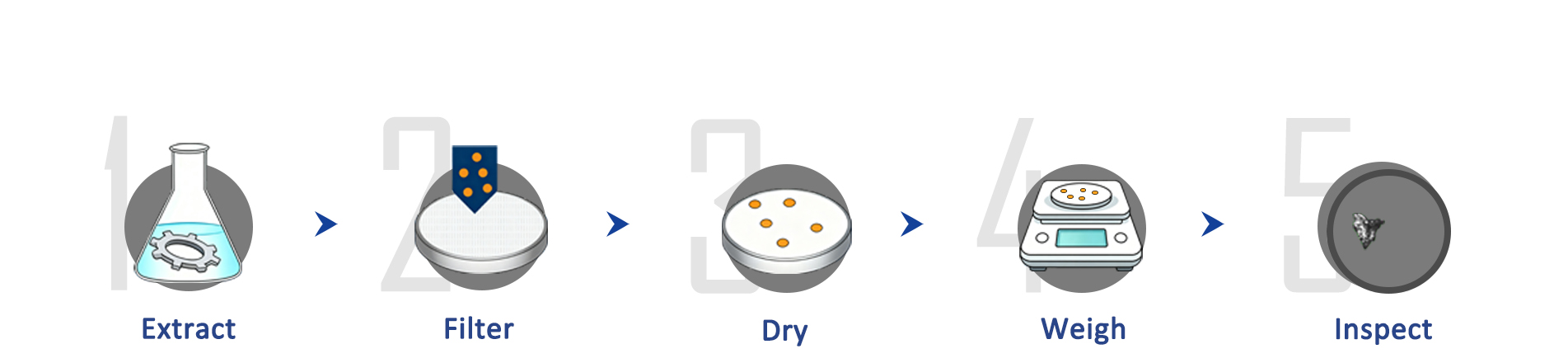
This standard specifies a complete set of testing procedures, including sample extraction, blank testing, particle collection, particle size classification, particle counting, composition analysis, report generation and result reproducibility. Its core value lies in unifying cleanliness testing methods across the supply chain, ensuring test results from different laboratories and suppliers are comparable and reproducible, and reducing quality disputes caused by inconsistent testing practices.
It is important to distinguish related standards: VDA19.1 focuses on laboratory testing methods, while VDA19.2 addresses cleanliness control during production and assembly. Its international counterpart is ISO 16232. Compared with ISO 16232, VDA19.1 offers more detailed operational guidelines and practical cases, and is the preferred technical specification adopted by European OEMs and German Tier 1 suppliers.
Key Updates in the 3rd Edition of VDA19.1 (July 2025)
Revised to accommodate electric drive units, high-voltage components and precision parts with micro-channels, the main revisions are as follows:
1. Newly added and standardized dry extraction methods for sensitive components that cannot be rinsed with liquid.
2. Refined judgment criteria for fine particles smaller than 50 μm.
3. Recognized SEM/EDX as a standard analytical method and unified the classification of particle materials, enabling traceability of contaminants including metals, fibres and silica dust.
4. Improved rules for test validation, blank value assessment and attenuation testing to reduce result deviations between laboratories.
5. Extended scope of application to new energy three-electric systems, thermal management, braking and hydraulic precision assemblies, beyond traditional powertrain parts for internal combustion engines.
Enterprises That Need to Be Familiar With VDA19.1
Vehicle OEMs, German and European automotive Tier 1 suppliers; manufacturers of precision pipes, valves, pumps, bearings, connectors and electric drive housings; third-party cleanliness testing laboratories, cleaning equipment and cleanliness analysis instrument suppliers; foreign trade component enterprises exporting auto parts to Europe and required to support customer audits, PPAP submissions and incoming inspections.
Industry Summary
With the continuous improvement of precision in automotive components and tightening cleanliness control requirements across supply chains, VDA19.1 has become a fundamental specification for automotive component quality management. Mastering VDA19.1 testing requirements, possessing qualified testing capabilities and issuing standardized cleanliness reports serve as an important foundation for component suppliers to meet audits by overseas OEMs and maintain stable qualification for supporting programs.
FAQ
Q: What is VDA19.1?
A: VDA19.1 is a particulate contamination testing specification for automotive technical cleanliness issued by VDA. It governs extraction, testing, analysis and reporting procedures for functional components. The latest 3rd edition was released in July 2025 and is widely applied in European automotive supply chains.
Q: Is VDA19.1 the same as ISO 16232?
A: They share a similar framework. ISO 16232 is the international standard, while VDA19.1 contains more detailed validation procedures and practical cases. German OEMs and Tier 1s prefer VDA19.1.
Q: Does VDA19.1 specify particle limits?
A: VDA19.1 does not set universal particle limits. Limits are agreed between OEMs and suppliers. The standard regulates testing methods to ensure consistent processes and reproducible results.
Q: What is the difference between VDA19.1 and VDA19.2?
A: VDA19.1 covers laboratory testing methods. VDA19.2 covers on-site cleanliness control during production and assembly, including production environment, tooling, personnel and logistics pollution prevention.
Please contact us for further inquiries or detailed information!
Tel:+86-13400008098
Email:sales@xiens.com
Web:www.xiens.com

 English
 Français
 Русский
 Español
 Português
 عربي
 Solicite um orçamento




 IPv6 REDE SUPORTADA